

Wattpad
You are what you eat
What we see and read and experience change us
Quels documents fournir pour la vérification sur Prince Ali Casino
En tant que spécialiste expérimenté du secteur iGaming, je vous invite à plonger dans les modalités précises de la vérification d’identité sur Prince Ali Casino. Cette étape, incontournable pour garantir la sécurité des joueurs et la conformité légale, mérite une attention particulière. Comprendre quels documents fournir facilite une validation rapide et sans accroc, tout en assurant une expérience de jeu fluide et sécurisée.
Pour tout joueur souhaitant déposer, miser et retirer ses gains sur princeali casino, la vérification d’identité est une procédure standard. Elle vise à confirmer votre identité, prévenir la fraude et respecter les réglementations anti-blanchiment d’argent (AML). Voici un guide détaillé pour savoir exactement quels documents préparer.
Pourquoi la vérification d’identité est essentielle ?
La vérification vise à protéger les joueurs et l’opérateur en évitant l’usurpation d’identité et les activités frauduleuses. Prince Ali Casino est licencié et conforme aux normes strictes des autorités de régulation, ce qui implique des contrôles rigoureux avant tout retrait. En général, cette procédure n’est pas facultative, mais obligatoire, et intervient souvent après la demande de retrait ou lors d’un premier gros dépôt.
Les types de documents demandés par Prince Ali Casino
Prince Ali Casino demande plusieurs types de justificatifs. Ces documents doivent être en cours de validité, lisibles et non modifiés. En voici la liste principale :
- Justificatif d’identité : carte nationale d’identité, passeport, ou permis de conduire.
- Justificatif de domicile : facture d’électricité, d’eau, de téléphone fixe, ou un relevé bancaire datant de moins de trois mois.
- Moyens de paiement : copie de la carte bancaire (recto/verso en masquant les chiffres centraux), capture d’écran du portefeuille électronique, ou relevé bancaire confirmant les transactions.
| Type de document | Description | Délai de validité |
|---|---|---|
| Justificatif d’identité | Carte d’identité, passeport | Valide, non expiré |
| Justificatif de domicile | Facture, relevé bancaire | Moins de 3 mois |
| Moyen de paiement | Carte bancaire, portefeuille e-wallet | Correspondant aux transactions |
Ces documents sont validés par l’équipe de vérification du casino, avec un délai moyen de traitement qui varie de 24 à 72 heures.
Comment préparer ses documents pour une validation rapide ?
Une présentation soignée et claire des documents accélère leur acceptation par Prince Ali Casino. Voici quelques conseils pour éviter les retards :
- Scannez ou photographiez en haute résolution, sans reflet ni découpe.
- Assurez-vous que toutes les informations soient parfaitement lisibles.
- Ne modifiez jamais vos documents, le casino utilise des outils sophistiqués de détection.
- Fournissez les documents dans les formats acceptés, généralement JPG, PNG ou PDF.
Dans certains cas, Prince Ali Casino peut demander un selfie avec le document d’identité pour confirmer votre présence active.
Mini-comparaison : Prince Ali Casino vs autres plateformes
Beaucoup de casinos en ligne imposent ces mêmes exigences. Cependant, Prince Ali se distingue par une procédure de validation plus réactive et un support client proactif qui accompagne chaque joueur étape par étape. Sur de nombreuses plateformes, les délais peuvent être plus longs, ce qui crée une frustration inutile.
FAQ – Vérification sur Prince Ali Casino
Q1 : Combien de temps prend la vérification des documents ?
Réponse : En général, la vérification est traitée sous 24 à 72 heures selon le volume de demandes.
Q2 : Que se passe-t-il si mes documents sont refusés ?
Réponse : Le support vous contactera pour préciser les raisons. Souvent, c’est lié à un flou sur les données ou une mauvaise qualité du scan.
Q3 : Dois-je fournir tous les documents d’un coup ?
Réponse : Pas nécessairement. Le casino peut demander les documents progressivement, surtout avant un retrait important.
Q4 : Puis-je jouer avant validation de mes documents ?
Réponse : Oui, mais les retraits seront bloqués jusqu’à la vérification complète.
Q5 : Cette vérification est-elle obligatoire pour tous les joueurs ?
Réponse : Oui, c’est une exigence réglementaire pour tous les utilisateurs souhaitant retirer des fonds.
En résumé, la vérification d’identité sur Prince Ali Casino est une étape clé, simple si vous avez les bons documents sous la main et que vous respectez les consignes de présentation. Cette rigueur garantit votre sécurité et celle de la plateforme. Pour une expérience réussie, préparez-vous à l’avance et n’hésitez pas à contacter le support en cas de doute.
Profitez sereinement de vos sessions de jeu en sachant que tout est fait pour protéger vos données et transactions.
Comment vérifier l’authenticité d’un casino comme True Luck en 2026
Dans l’univers en constante évolution des casinos en ligne, la confiance demeure le pilier fondamental pour tout joueur. True Luck, comme beaucoup de nouvelles plateformes en 2026, propose une large gamme de divertissements, mais comment s’assurer que ce casino est réellement fiable et sécurisé ? En tant qu’analyste chevronné spécialisé dans les plateformes de jeux en ligne, je vous guide à travers les critères essentiels pour vérifier l’authenticité d’un casino comme True Luck.
L’expérience de jeu ne se limite pas à l’interface ou au catalogue ; la fiabilité juridique et technique du site est primordiale. Par exemple, cet trueluck casino online possède plusieurs indices claires qui attestent de sa légitimité. Examinons ensemble les clés pour ne pas se tromper.
Qu’est-ce qui garantit la sécurité d’un casino en ligne ?
Le premier indicateur d’authenticité est la licence. Les meilleurs casinos opèrent sous régulation stricte, délivrée par des autorités reconnues telles que la Malta Gaming Authority (MGA), la Commission des jeux du Royaume-Uni (UKGC) ou encore l’Autorité Nationale des Jeux (ANJ) en France. True Luck affiche fièrement sa licence, ce qui signifie que ses opérations sont auditées régulièrement et qu’il respecte un cadre légal rigoureux.
Ensuite, la sécurité des données personnelles et financières repose sur un cryptage SSL (Secure Socket Layer). Cette technologie empêche les interceptions non autorisées de vos informations sensibles. Tester cette couche de protection est simple : un cadenas dans la barre d’adresse du navigateur indique une connexion sécurisée.
Enfin, le fair-play est un autre élément à vérifier. Les casinos dignes de confiance utilisent des générateurs de nombres aléatoires (RNG) certifiés par des organismes indépendants. True Luck communique sur ces audits externes, renforçant ainsi son image de transparence.
Quels sont les moyens de paiement fiables chez True Luck ?
Les méthodes de dépôt et retrait sont un reflet direct de la crédibilité d’un casino. Voici ce que propose True Luck :
- Cartes bancaires Visa, MasterCard
- Portefeuilles électroniques comme Skrill, Neteller
- Cryptomonnaies populaires (Bitcoin, Ethereum)
- Virements bancaires sécurisés
Ces options garantissent une gestion fluide et sécurisée des fonds, avec des délais de retrait généralement inférieurs à 48 heures, ce qui est plutôt rapide comparé à la moyenne du marché.
| Méthode de paiement | Délai moyen de retrait | Sécurité |
|---|---|---|
| Visa/MasterCard | 24-48 heures | Forte (cryptage SSL) |
| Skrill/Neteller | 12-24 heures | Très élevée |
| Cryptomonnaies | 1-12 heures | Haute (blockchain) |
| Virement bancaire | 2-5 jours | Standard |
Comment détecter les fake bonus et offres trompeuses ?
Le système promotionnel est souvent une zone grise. True Luck propose des bonus attractifs avec des conditions de mise clairement énoncées. Contrairement aux plateformes douteuses qui noient les joueurs sous des termes impossibles à remplir, True Luck affiche la transparence.
Voici quelques points pour analyser les bonus :
- Taux de conversion des bonus en argent réel
- Conditions de mise raisonnables (maxi 30x)
- Absence de clauses abusives
- Bonus fréquemment actualisés et vérifiables
Cette approche honnête contribue à bâtir une relation de confiance durable avec les joueurs.
Quid du support client et de l’accessibilité ?
Un support rapide et multilingue est primordial. True Luck propose :
- Chat en direct disponible 24/7
- Assistance par email et téléphone
- FAQ détaillée, incluant les questions liées à la sécurité et aux paiements
L’ergonomie du site et la navigation intuitive sont également des signes d’un vrai professionnel, garantissant un parcours fluide, même pour les moins expérimentés.
Mini-comparaison : True Luck vs un casino moyen du marché
| Critère | True Luck | Casino moyen du marché |
|---|---|---|
| Licence | Oui, MGA et autres autorités | Parfois absence ou licences douteuses |
| Transparence des bonus | Conditions claires et justes | Clauses cachées, conditions abusives |
| Délai de retrait | Rapide ( | Souvent lent (>72h) |
| Support client | 24/7 multilingue | Limité, heures restreintes |
| Sécurité données | Cryptage SSL + audits RNG | Pas toujours vérifié |
FAQ : Questions courantes sur la vérification d’un casino en 2026
Q1 : Comment savoir si la licence d’un casino est valide ?
Vérifiez directement sur le site de l’autorité de régulation en entrant le nom du casino ou son numéro de licence. Les plateformes sérieuses vous afficheront ces infos clairement.
Q2 : Les bonus sont-ils toujours fiables ?
Non, certains sont seulement prétexte à attirer les joueurs. Prenez le temps de lire les modalités et privilégiez ceux sans conditions de mise déraisonnables.
Q3 : Que faire en cas de problème avec un retrait ?
Contactez d’abord le support client. Si la réponse est insatisfaisante, vous pouvez signaler le problème à l’autorité de licence.
Q4 : Les cryptomonnaies sont-elles sûres ?
Oui, grâce au système blockchain, les transactions sont généralement très transparentes et rapides.
Q5 : Puis-je jouer en toute sécurité sur mobile ?
Si le site ou l’application utilise un cryptage SSL et est certifié, oui. True Luck propose une interface mobile optimisée pour sécuriser votre expérience.
Vérifier l’authenticité d’un casino en ligne comme True Luck en 2026 demande donc rigueur et attention aux détails. Licence, sécurité technique, transparence des bonus, fiabilité des paiements et qualité du support sont les piliers à considérer. En suivant ces recommandations, votre expérience de jeu sera bien plus sereine et agréable.
To pseudonym or not to pseudonym
I write under a pseudonym.
There are pros and cons to writing under your own name. Can’t really tell you what’s the right thing to do for you (if you’re a writer or want to be one). I can, however, tell you about how I came to write under a pseudonym and why that ended up being Felix M. Bloom. Maybe that can serve as inspiration. Or make you do the opposite and write under your real name…
Back in 2014 is started sharing some of what I had written online on a site called Wattpad.com.
I met a lot of really nice people there, mostly fellow amateur writers fumbling around in the dark, trying to figure things out. I still have a user there, but it’s not as important as it once was (the site is massively skewed towards young(ish) women and the romance genre).
Anyway. To have a user, I had to have a username. So I picked a username that I already had used elsewhere: “twilightpeaks.” There’s a story behind that username, but it’s not important right now. Fast forward a bit, and I’m a little bit more serious about my writing, and can’t go around calling myself “twilightpeaks.”
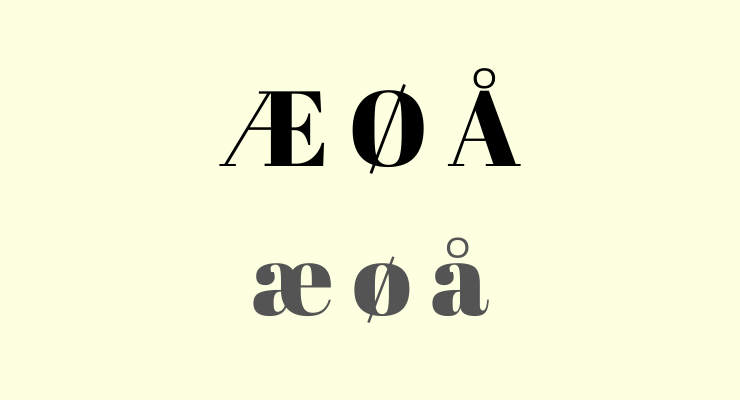
I’m not interested in using my real name. I’m writing in English, reaching out to an English-speaking audience, and my real name doesn’t have a good ring to it in English. In fact, it contains the letter ‘ø’ which doesn’t even exist in English.
I also wanted my writing persona to be separate from my IRL persona. I had already tried to involve people I knew in my writing, and that didn’t work out as expected. Nothing to be ashamed of, but it was just… plain weird.
Showing this other side of me to people who thought they knew everything about me made me uncomfortable. Some of them didn’t even have an appreciation for the genres I was writing in, so why show it in the first place? Why spend any time at all explaining myself or thinking about what people I new might think of what I wrote?
Pretty silly, eh?
Well, the mind can be a silly place sometimes but you better take it seriously nonetheless. If something makes you uncomfortable, you can either try to change so it’s not a problem anymore, or you can take the hint and do it in another way.
I couldn’t see any practical way to change how I felt about the matter, so I went for a pseudonym. I haven’t regretted it. It’s still me, my pseudonym, but writer-me, not IRL-me. I’m not trying to hide from the world, I’m trying to distance myself from distractions. It’s actually pretty easy, I think, using only the info in this post, to find my actual name. If you really wanted to, that is.
Why Felix M. Bloom?
Well, I wanted something that had a nice ring to it in English and that also incorporated parts of my real name. Nothing more to it.

Writing in a second language
No, I’m not talking about Tolkien Elvish or Klingon or something like that.
I’m talking about English.
That’s right, English isn’t my first language. If you hadn’t noticed, I couldn’t be happier.
My first language is Norwegian. As in the language of Norway. We’re not a big country, just over 5 million people. And while Danes (+5 million) and Swedes (+10 million) can read Norwegian just fine if they have to, that’s not something they would do for entertainment purposes.
So beyond those 5 million people, my target audience is limited – and 5 million was pretty limiting, to begin with. I could get translated, I suppose, but that mostly happens to already commercially successful writers. Which I’m not, I’m afraid. Furthermore, what Norwegian authors do get translated are mostly crime writers. Well, that was an oversimplification, but you get the picture.
Fun fact: there are about 5 million people in the US with Norwegian roots but almost none of them actually speak Norwegian, let alone read books in Norwegian.
Why did I end up writing in English?
To become internationally famous and universally acclaimed, I hear you say.
Sorry, not the right answer.
A big part of that decision – if it can be called a conscious decision, it sort of just happened, almost subconsciously – has to do with my favorite genres. Those being sci-fi and fantasy. Growing up, there were no Norwegian fantasy authors at all. None that I was aware of, anyway. The only Norwegian translations I could find at the library were the Hobbit and Lord of the Rings. Sci-fi was almost the same. We did have Bing & Bringsværd who wrote fabulous Norwegian sci-fi, but that wasn’t nearly enough for my young, malleable mind.
To read more fantasy and sci-fi, I had to force myself to read them in English. All Norwegian children learn English in school but I was young and these books were so much more than the childish schoolbook texts we worked with…
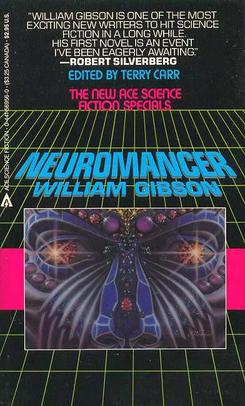
LotR in English to experience the real deal (turned out the Norwegian translation I had was really, really good). Herbert’s Dune series. Neuromancer by Gibson. Terry Pratchett. Wheel of Time. The list is much longer, but you get the picture.
My point is as follows: to me, the fantasy and sci-fi genres are firmly linked to English, not Norwegian. English is the language of the far future – and of the magical past. It just feels wrong somehow to read – and write – in Nowegian.
So that the real reason I started writing in English. It was the right thing to do for me.
The current literary situation in Norway is a bit different. Fantasy being much bigger than sci-fi, we actually got some genre writers that do write in Norwegian. Some of them are doing well by all accounts but I can’t get into it because they aren’t in English. Maybe if they were translated – only half-joking.
Fast forward to where I started posting my amateur writing online. Guess how many Norwegian sites there are for sharing stuff? ‘Not many’ is indeed the correct answer. So my English bias only got reinforced. Which in turn led me to write stuff like poetry, shorts, and erotica in English.
These days I can’t really envision going back to writing in Norwegian. One exception though: I’ve written a children’s book in Norwegian. That felt pretty natural, so maybe if I actually tried, it wouldn’t be so hard to write other genres as well?
Writing in a second language is a unique challenge. While I’m already ‘good enough’ to be writing in English, and my proficiency is ever-increasing, there are some finer grammatical points I haven’t fully mastered. My vocabulary is fine, I think. You can never know too many words, but just learning a bunch of little-used words to spice up your text isn’t a good move anyway. Idioms and standard phrases can be an issue. There are some obscure differences in punctuation. Prepositions are easily translated, but they are sometimes used differently between English and Norwegian. Those are some examples off the top of my head.
It’s not an insurmountable obstacle by any means, but it does require extra diligence on my part. And sometimes I do make mistakes that a native writer wouldn’t. I like to tell myself that when I get a professional editor, he or she will spot such blunders immediately.
The advantages of writing in English far outstrip the drawbacks: when I’m picked up and published, my work is already in English, ready to be read by a good portion of the people of the world, no translation required 🙂
In the beginning…
…the author created the world. Then he started telling stories.
That’s certainly one way to go about writing a novel, but I wouldn’t recommend it!
A better approach to world-building is what I like to call the iterative approach. This basically means you build only as much as you need to get the story started, then add in more bits and pieces as the story progresses. Maybe you guessed it, but my day job is in IT, where iterative design processes are pretty common.
Let’s take a step back and talk about what world-building is – and why it matters.
Stories, especially something as complex as a full novel, cannot exist in a vacuum. They must be told in the context of the world (or the ‘setting’ as it’s sometimes called) they are taking place in. That world can be our own – or a variant of it. Or as is often the case for sci-fi and fantasy stories, a radically different reality.
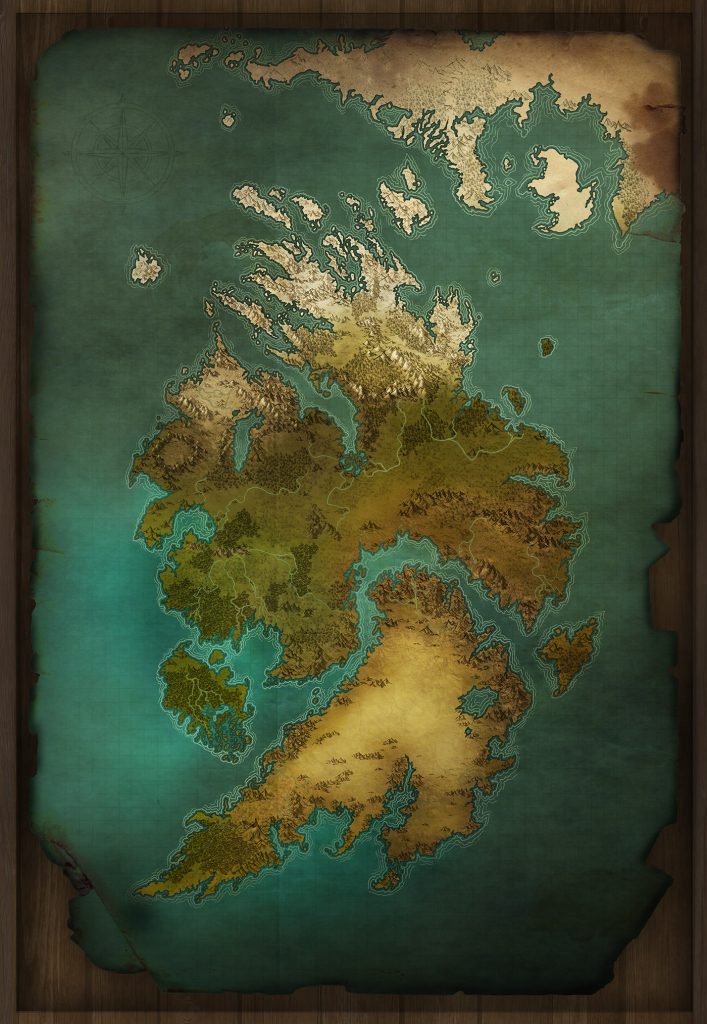
The former typically means a lot less work for the author than the latter. If you’re writing the Next Big Fantasy Novel, you’ll need to come up with a lot of background to make a believable world. You’ll need to know a bit about geography, history, religion, peoples, naming conventions, customs, weather, and a million other things.
If your novel is set in a high school very much like the one you went to, you’ll already have most of the knowledge needed to present the world in a believable fashion. You might want to change the name of the school, place it in a different part of the country, and so forth, but it’s not going to be as work-intensive as that fantasy world.
Regardless of the kind of world you’ve chosen to place your story in, whether it’s a mundane town and its high school, or a massive fantasy kingdom filled with warring factions and strange races, it needs to be internally consistent.
That means two things:
1. Throughout the story, you have to present the same things the same way. If the main school building is three stories tall, it can’t suddenly be two or four stories later on, just because the story needs it to be. You’ll have to revise your story – or your setting – so that everything fits.
The same goes for characters by the way – they have to remain true to themselves. They can change, yes, but they can’t for no reason suddenly act and think differently from what they used to. But let us talk more about that some other time.
2. You’ll want to gradually show the reader more of the world as the story progresses. Not as an info-dump prologue or blocks of heavy exposition, but as a natural part of what’s happening in your novel. The reader is shown more parts of the world as the action moves around. Characters talk about things that have happened in the past. This gives the reader a feeling that there is a larger world out there, one that makes sense, and is interesting to learn more about.
Again it’s almost the same with your characters: you want to introduce them gradually, not through a block of text that simply states who they are and what they are like.

To summarize: you need to have an idea of what your setting is like before you start writing if you want to present a coherent whole. If it’s not coherent, you’ll run into trouble later and your readers will notice (they won’t be very impressed).
As an added benefit, I find writing to be much easier if I have a clear and strong worldview in my head. Ideas come more easily, the dialogue flows more freely, and I instinctively know when to reveal some tidbits about the setting to my readers.
Now we can return to the iterative approach to world-building:
I’ll start by coming up with a rough framework, then add some details that are relevant to the start of the story. Next, I’ll write a few chapters. As I do that, I’ll notice where I’m lacking setting details and note it down. I will usually have some great ideas for the setting as I write, unrelated to the chapters I’m currently writing. I’ll note down those too.
When I’m done with the current chapters, I go back to my world bible (a text document where I structure all setting info) and expand on the bits I found lacking and add entries for whatever good ideas came up. Then I go back to the recently written chapters and add in the missing details. Then I write a few more chapters, taking notes, going back, and updating the manuscript, repeating as needed.
Sometimes I have sessions where I just do a lot of worldbuilding, structuring old notes or expanding upon stuff that’s been left blank. This typically happens when the first draft is either finished or at least close to it.
When finally I have a comprehensive, well structured bible that covers everything I need, I can do a second draft, making sure everything fits together, and adding in additional setting details wherever it seems natural to do so.
Tip 1: Don’t try to fit every setting detail into your finished novel. That’s too much. Show and tell only what’s relevant. The rest is for your eyes only, the secret framework upon which the novel hangs.
Tip 2: At some point you have to stop the setting revisions and say: “this is it,” or you’ll never be finished with the actual story as it is dependent on the framework beneath.

I’ll wrap up with a few examples:
Example 1:
In my novel Cabin Fever (genre: paranormal-romance-erotica), I started the iterative approach by placing the story in a world very much like the real one. Except there is a hidden, supernatural world out of view of normal people. Witches, warlocks, werewolves, vampires, the works. But at this stage, I didn’t need any details on those bits. I then provided some additional details by placing the MC in a fictional city not entirely unlike the one I live in.
After writing a few chapters it’s revealed that one character (a villain) is maybe a witch and the MC might have a supernatural connection as well. That’s when I sat down and expanded upon the mythical and magical aspects of the setting. In doing so, I got a lot of ideas about how to advance the story.
Locations used in the rest of the story were all known to me: a Scandinavian city, generic office and apartment buildings, a cabin in the woods, snow mountains and forests, and didn’t require many notes to be coherent and believable.
After the first draft was done, I revised my notes a bit, then went back and made sure everything was consistent and that enough (but not too much) setting info was leaking through and that was it.
Example 2:
In my fantasy WIP Daughter of the Dragon, I started by deciding to use a variation of the same magic system and cosmology I had created for another novel. I wanted a pretty standard fantasy-Europe kind of world, but I didn’t want the connection to be overwhelming. Which led me to scrap the Norse-Greek-Egyptian gods from that other novel, and replace them with unique “fantasy-flavor” gods (at this stage I didn’t detail them). I made a little map of the local area, focusing on the village where the story begins, and a world map (more of a sketch really) placing the village in a kingdom, and the kingdom on a continent.
Then I wrote a rough draft of 3 chapters, 1 for each of 3 MCs. After doing that, I had gotten a lot of new setting ideas – and discovered many areas that I needed to expand upon. In fact, I felt I was lacking too much context to go forward with the story. After a few setting-only sessions, I had a more comprehensive world bible and could continue. Next, I redid those 3 first chapters, in the process making them 6 full chapters instead as the setting, the plot, and the characters themselves bloomed in my mind.
Until next time
Felix
A brief history of writing
I’ve been telling stories for a long time. Since I was a kid, playing with my friends in galaxies far, far away or in enchanted forests filled with monsters, maidens, and treasure.
At some point, I began jotting some of my stories down. Not entirely sure when it was sufficiently structured to be called “writing” with the aim of producing something coherent I could share with an audience. Around the year 2000 is my best guess. Said audience was strictly limited to friends and confidantes.
That began to change in 2014. That’s the year I stumbled upon watpad.com and began interacting with other amateur writers and sharing my work. It was learning by doing, so I wrote a lot, and my understanding of the author’s craft improved dramatically.
Last year wasn’t all bad for me. 2020 was the year I self-published my first novel, Cabin Fever. It’s an erotic romance sprinkled with a paranormal mystery. I think it’s well-written, witty, and sexy as can be. Which is what I was aiming for. Mission accomplished. Well done, Felix. Now get on with the rest of your writing career – this was just the beginning!
I write for two reasons:
One: I love telling stories. Always have. To me, there is something intensely rewarding about the process of bringing together a great setting, compelling characters, and an exciting plot and transforming it into a whole that transcends the sum of its parts.
Two: I love sharing my stories with others. Much as I enjoy the process of writing, I love sharing my stories even more. There is nothing as elating as getting a vote of confidence from a reader or having someone leave an insightful review of my story.
Can I make it as a real, published author?
Self-pub is great. To me, that was an important milestone. Like most budding authors, I yearn for the chance to be published for real by a real publishing company. That is my new goal, the dream that gives me something to work towards. And the incentive to keep writing, keep improving.
I think I have unique and compelling stories. I think my writing skills are sufficiently advanced. If I keep writing good stories and make an effort to reach out to various publishers, it is my hope that someday someone will realize what an amazing author I am and publish my novels.
Gotta aim high, right?
A new year, a second life
Hello and welcome to the homepage of author Felix M. Bloom.
I created this web page back in 2020, but never really took it anywhere. That changes as of now. Going forward this is my official homepage. Here you can find static info about me, how to get in touch, how to support my writing, and so forth. I also intend to periodically blog about my life as a writer.
Hope to see you again soon!
Felix